
Greenfield vs. Greyfield: The UK’s New Town Debate and What It Means for You

Greenfield vs. Greyfield: The UK’s New Town Debate and What It Means for You
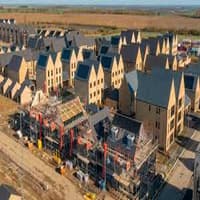
In a bid to realize the post-war dream of providing solutions for the housing problem in Britain, the current UK government has decided to go back to the idea of building new towns all over England. Unfortunately, this recent declaration by the Housing Minister has caused controversy. He stated that some of the new towns will definitely be built on greenfield sites – areas of undeveloped farmland located outside of the existing towns and cities. Although the prospect of having affordable houses is something appealing to many people, the choice of building them on greenfield areas brings a lot of considerations. As far as individuals who will be planning to commute from the new towns, arranging for a Heathrow Airport Taxi for their journeys will become crucial. But what really matters is the price we have to pay environmentally and socially for building on such areas. Read on to know about the clear benefits and major drawbacks of constructing new towns on greenfield land.

The Case for Greenfield: Space, Speed, and Simplicity
1. Lower Land Acquisition and Preparation Costs
A developer finds that a greenfield site is much easier to work on compared to a brownfield site. There would be no underground foundations, hazardous materials, or abandoned buildings to remove. The soil may be stable, and there will be little need for foundation works due to flat terrain. The ease of development would speed up the process and reduce costs, thus allowing for the rapid production of homes at reduced prices. The goal of producing 1.5 million houses necessitates efficiency, and a greenfield site would be the way to go.
2. Master-Planned Communities Without Compromise
The availability of open space offers the architects and town planners an opportunity to start afresh. Towns developed from scratch can be provided with energy-efficient power supply networks, cycle tracks, efficient water drainage mechanisms, and green belts. In contrast to forcing houses into spaces within cities, greenfield sites offer the possibility of creating garden cities with sufficient recreational areas, learning institutions, and health centers. The planners can easily segregate living areas from industrial premises while ensuring adequate access to sunlight and air circulation for each house.
3. Reduced Displacement and Community Disruption
Utilizing unused farmland spares developers from the politically tricky job of knocking down homes already in place or moving companies. It’s also not necessary for anyone else to move off an undeveloped piece of farmland (besides the farmer himself). This results in less time spent seeking approval because fewer existing residents will need to complain about being displaced. In other words, expanding outwards is easier socially for local municipalities than upwards.
The Hidden Costs: Why Greenfield New Towns Face Backlash
1. Irreversible Loss of Agricultural and Natural Capital
English countryside is more than a picturesque landscape; it serves an important purpose of contributing to the country’s food security and biodiversity. Once a piece of countryside gets concreted, there is simply no way back for the rich topsoil which has taken decades and even centuries to form. The expansion of every new town comes at the expense of hundreds of acres of land that could otherwise have served as farmland or carbon sinks. In addition, the land in question may be home to historic hedgerows or even serve as a habitat for endangered animals like the skylark and the hedgehog. The fragmentation of such ecosystems can cause their extinction in the area, and this cannot be offset by any “compensation planting.” Travellers dependent on efficient road transport, such as hiring a Taxi to Luton airport will have to consider this aspect of their travels.
2. Induced Demand and Car Dependency
Although there may be plans to develop walkable towns, reality tends to favor car-based planning in such developments. The reason is that the town is usually situated on the fringes of the city without any links to its transport network. Consequently, the residents will require cars to access workplaces, malls, or train stations. As such, there is increased traffic in the area, thus resulting in traffic congestion and pollution. In contrast to brownfield developments where the town is connected to the subway or tram transport systems, greenfield towns have to depend on cars.
3. The Sprawl Effect and Infrastructure Drain
Perhaps one of the most serious charges leveled against the concept is that of “urban sprawl,” the development of housing on an inefficient basis that invades rural land without creating any true urban life. New towns built on greenfields may not have enough people per square mile to justify regular bus services, high street retail outlets, or hospitals. As a result, people must travel to the nearby towns for employment and recreation. This means that the pre-existing infrastructure of sewers, electricity, and doctors’ surgeries cannot cope with thousands of extra dwellings.
Also raed: Top 10 Unmissable Places to Visit on the Wirral Peninsula England
Greenfield vs. Brownfield: A False Dichotomy?
Of course, one cannot help but wonder why greenfield sites rather than the many hectares of brownfields available? As stated by The Campaign to Protect Rural England (CPRE), there are sufficient brownfield lands to construct over a million houses. However, it should be noted that these brownfields are usually in unattractive post-industrial towns of northern regions whereas the housing problem exists in South East and in the vicinity of London. Cleaning up the brownfields may prove a lengthy process and cost much money; it may take ten years to decontaminate an ex-chemical plant. Thus, the pragmatism of the British government lies in that only greenfield land can provide the needed results within the set timeframe. But environmental activists claim that this is just the lack of political willpower.
The Transport Conundrum: Connecting New Towns to the National Network
If there is to be success in creating a viable community which minimizes the need for cars, public transport needs to be an integral part of the design process. Sadly, most of the proposed greenfield locations are situated near motorways but far from the nearest railway stations. This means dependence on taxis, car shares, and cars. As regards air travel, people residing in greenfield new towns adjacent to Oxford and Cambridge can rely only on a pre-arranged transport if they want to guarantee themselves access to an international airport. For those travelling for business purposes to destinations in the north, a direct connection would always be preferable to unreliable local buses. Should the government decide to go ahead with the development of greenfield new towns, it should provide a fast transport link right away.
The Verdict: Can Greenfield Work?
The list of benefits offered by a greenfield site is tempting; the area is easier to develop, quicker to build upon, and immune to the politics of inner-city construction. They provide an opportunity to create dream communities complete with green spaces, EV recharging facilities, and passive solar orientation. However, the downsides are equally serious: irreplaceable ecological damage, car dependence, and expansion of urbanization in violation of the very values that define England.
There is no point in banning all new greenfield sites. Instead, there should be a rigorous “brownfield first” policy. Only those greenfields whose agricultural worth is insignificant, located close to the existing transport routes and incorporating net-zero biodiversity loss could be allowed to go ahead. Moreover, there has to be a legally binding promise from each new community to ensure a tram or train connection to a nearby urban area within five years of the completion of the first building. Otherwise, Mr. Minister’s pronouncement will be recalled not as a solution to a serious problem but as yet another nail into the coffin of rural England.
For those who will either be currently residing or relocating to such places, the issue of transport, from transporting children to school to taking flights out of the city, will become an important part of their life. As the nation discusses issues related to the legislation for such projects and its environmental impact, all that matters to the individual citizen is a convenient means to travel to the train station or a luxury Heathrow Airport Taxi for his vacation plans. The success of such new towns lies in their ability to connect to the outside world.





Responses